EV Charging at Home: Is Your Landed House Insurance Actually Covering It?
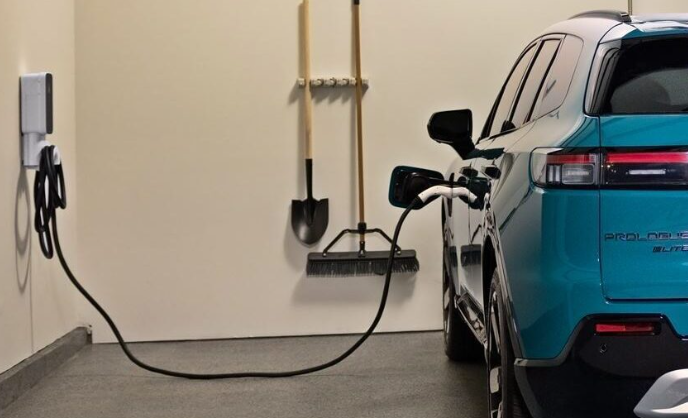
At 5:03am on 17 August 2026, a two-storey terrace house in Alam Damai, Cheras went up in flames. By the time the Kuala Lumpur Fire and Rescue Department (JBPM) put it out an hour and a half later, the house was completely gutted. JBPM's assistant director said the fire was believed to have started from an electric vehicle that was being charged in the house's foyer.
Two days later, Bomba's director-general admitted publicly that Malaysia has no home EV charging safety guidelines only rules for commercial premises. Around the same time, PIAM, the insurers' association, issued a clarification on how home insurance actually responds when an EV charger causes a fire. If you own a landed house and either have an EV or are thinking about installing a home charger, both statements matter to you directly.
Does a Standard Fire or Houseowner Policy Cover an EV Charger Fire?
Yes, generally, but only if you've told your insurer the charger exists. PIAM confirmed that standard Houseowner and Fire insurance policies in Malaysia cover fire damage regardless of what ignited it, as long as there's no fraud, deliberate act, or breach of policy conditions. A fire that starts from a charging EV is, in principle, treated the same as a fire that starts from a faulty stove or an old wiring fault.
The catch is what "breach of policy conditions" can mean in practice. Installing a permanent wallbox changes what's inside your house and how much it would cost to rebuild it, and PIAM has explicitly said homeowners need to inform their insurer when they install one, both so the sum insured reflects the actual rebuilding cost and so there's no dispute later about what was and wasn't disclosed.
Do I Need to Tell My Insurer I Installed a Wallbox?
Yes. A permanently installed EV charger is treated as a fixture of the building, the same category as air-conditioning units or built-in cabinetry, not as a separate gadget. That means it adds to the value of what you're insuring, and PIAM's guidance is that you should notify your insurer at installation, not wait until you're filing a claim.
This is also where the fire policy and your motor/EV policy split. Your houseowner or fire policy covers the building and its fixtures, including a hard-wired charger. Your motor insurance covers the vehicle itself. A portable charging cable plugged into a normal socket generally sits with the motor policy or an EV add-on, not the house policy, so which policy responds depends on what kind of charging setup you actually have.
A wallbox you never declared is a wallbox your insurer didn't price into your sum insured and that gap only becomes visible at the exact moment you're filing a claim.
Does It Matter Who Installed the Charger?
It matters more than most homeowners realise. PIAM said insurers expect homeowners to take reasonable precautions and maintain electrical safety standards, and that claims assessors will look at the official fire investigation report to rule out negligence or safety violations before paying out.
In practice, that means the installer's paperwork matters as much as the installer's work. A compliant home EV charger installation in Malaysia requires an ST (Suruhanjaya Tenaga)-registered electrical contractor with a valid Form Q, a licensed wireman on site, a proper TNB load assessment before work begins, and — at the end — two documents: Form G (the completion certificate) and Form H (the test certificate). Officials investigating the Cheras fire specifically flagged wiring size, breaker protection, and equipment standards as the likely fire sources, not the EV itself. Bomba noted that Malaysia recorded around 25 EV-related fire incidents over the past three years — a relatively small number, but one where the installation, not the car, is usually the weak link.
If any of these apply, it's worth a call to your adviser before it's a claim.
This article is intended for general educational purposes and does not constitute professional insurance advice. Coverage terms vary between insurers and policies. Please consult a licensed Malaysian insurance adviser for guidance specific to your business situation.
This content was researched and drafted with the assistance of AI, then reviewed prior to publication.