Is Your Business Actually Covered for Flood Damage? Most Malaysian SMEs Aren't
In February 2026, Bank Negara Malaysia flagged something uncomfortable: even in areas that flood repeatedly, insurance take-up stays low. Look back at the 2021 floods and the number is stark, roughly RM4 billion of the estimated losses, about two-thirds of the total, had no insurance behind it at all. That wasn't just households. A large share of that gap sits with small and mid-sized businesses that assumed their existing policy already had them covered.
It usually hadn't. Most standard SME fire insurance and Industrial All Risks (IAR) policies in Malaysia exclude flood damage by default. Which means someone has to actively ask for it and pay extra premium. If nobody asked, nobody's covered, and the business only finds out after the water recedes.
For a Penang-based agency working with SMEs and manufacturers across the country, this is the single most common and most expensive misunderstanding we see. Here's what's actually going on, and what to check before the next monsoon season makes it personal.
Why Are So Many Malaysian Businesses Uninsured for Flood?
Because flood cover isn't automatic, it's opt-in, and most business owners don't realise they need to opt in. A standard fire policy protects against fire, lightning, and explosion. It does not protect against water damage from flooding unless a special perils extension has been specifically added and priced into the policy.
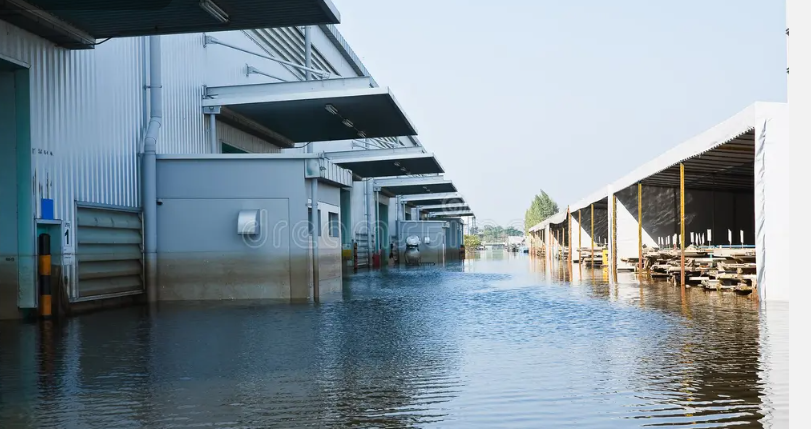
This creates a quiet trap. A business renews its fire policy year after year, sees the premium, sees "property insured," and assumes the coverage is comprehensive. Then a flash flood hits an industrial park in Klang or a warehouse district in Prai, stock and machinery are damaged, and the claim gets rejected, not because the insurer is being difficult, but because the peril was never insured in the first place.
BNM's own data backs this up: floods account for roughly 85% of all recorded disasters in Malaysia since 2000, yet insurance penetration for this specific risk remains far below what that frequency would justify.
What Does "Special Perils" Actually Mean for a Factory or Warehouse?
It means the specific list of extra risks (flood, windstorm, landslip, bursting of pipes and impact damage) that your base fire policy leaves out unless you add them back in or you do an all risk policy but for many warehouses this may be more expensive. For manufacturers and warehouse operators, flood is the one that matters most, because ground-floor storage, raw materials, and heavy machinery are exactly what floodwater damages first.
The extension isn't automatically included in Industrial All Risks (IAR) or fire policies because insurers price flood risk separately, based on location. A factory in a known flood-prone zone in Kelantan or Perak will pay a different (usually higher) rate for the extension than one on higher ground in Penang. That's also why some businesses get quoted for the rider and decide to skip it but skipping it doesn't reduce the risk, it just moves the cost from "premium now" to "total loss later."
The businesses getting caught out aren't the ones ignoring insurance, they're the ones who assumed their existing fire policy already included flood, when for most Malaysian policies it never has.
Who Actually Needs to Check Their Policy?
Any business with physical stock, machines, or valuable items in a flood-exposed area — which, given Malaysia's monsoon pattern, is a longer list than most owners assume.
Quick Risk Check — you likely need flood cover (or need to confirm you already have it) if:
✗ Your premises, warehouse, or factory floor is at or near ground level
✗ You operate in or near a known flood-prone state (Kelantan, Terengganu, Pahang, Selangor's lower-lying industrial areas, Perak)
✗ You store raw materials, finished goods, or machinery that can't easily be relocated on short notice
✗ You've never specifically asked your insurer or adviser "does my policy include flood, or do I need to add it?"
✗ You renew your fire policy each year without reviewing what perils are actually listed
✗ Your business would struggle to survive weeks of downtime while equipment is repaired or replaced
If two or more of these apply, it's worth a five-minute check with your policy schedule (not the marketing brochure, but the actual policy).
Key Terms Glossary
Special Perils Extension — An add-on to a standard fire insurance policy that covers additional risks such as flood, windstorm, and landslip, which are excluded by default.
Industrial All Risks (IAR) — A broader property insurance policy for factories and industrial premises, typically covering more perils than basic fire insurance, but still usually requiring flood to be specifically included.
Business Interruption (BI) Insurance — Coverage for lost income and ongoing fixed costs (rent, salaries) while your business can't operate due to an insured event, such as flood damage to your premises.
What Should You Do Before the Next Flood Season?
Pull out your current fire policy or IAR policy schedule and check, in writing, whether flood is listed as a covered peril not assumed, confirmed. If it isn't there, get a quote for adding it, and separately check whether your sum insured still reflects your current stock and equipment values, since both gaps tend to hide until claim time.
It's also worth asking about Business Interruption cover alongside property cover. A factory that floods doesn't just lose stock, it loses weeks of production and revenue while repairs happen, and BI cover is what keeps payroll and rent funded during that gap.
Bottom Line
The 2026 BNM warning isn't a new risk, floods have been Malaysia's dominant disaster type for over two decades.
If you're not sure whether your current policy would actually pay out on a flood claim, Karwai Risks can review your existing coverage and get you a clear quote for the gaps.
This content was researched and drafted with the assistance of AI, then reviewed prior to publication.